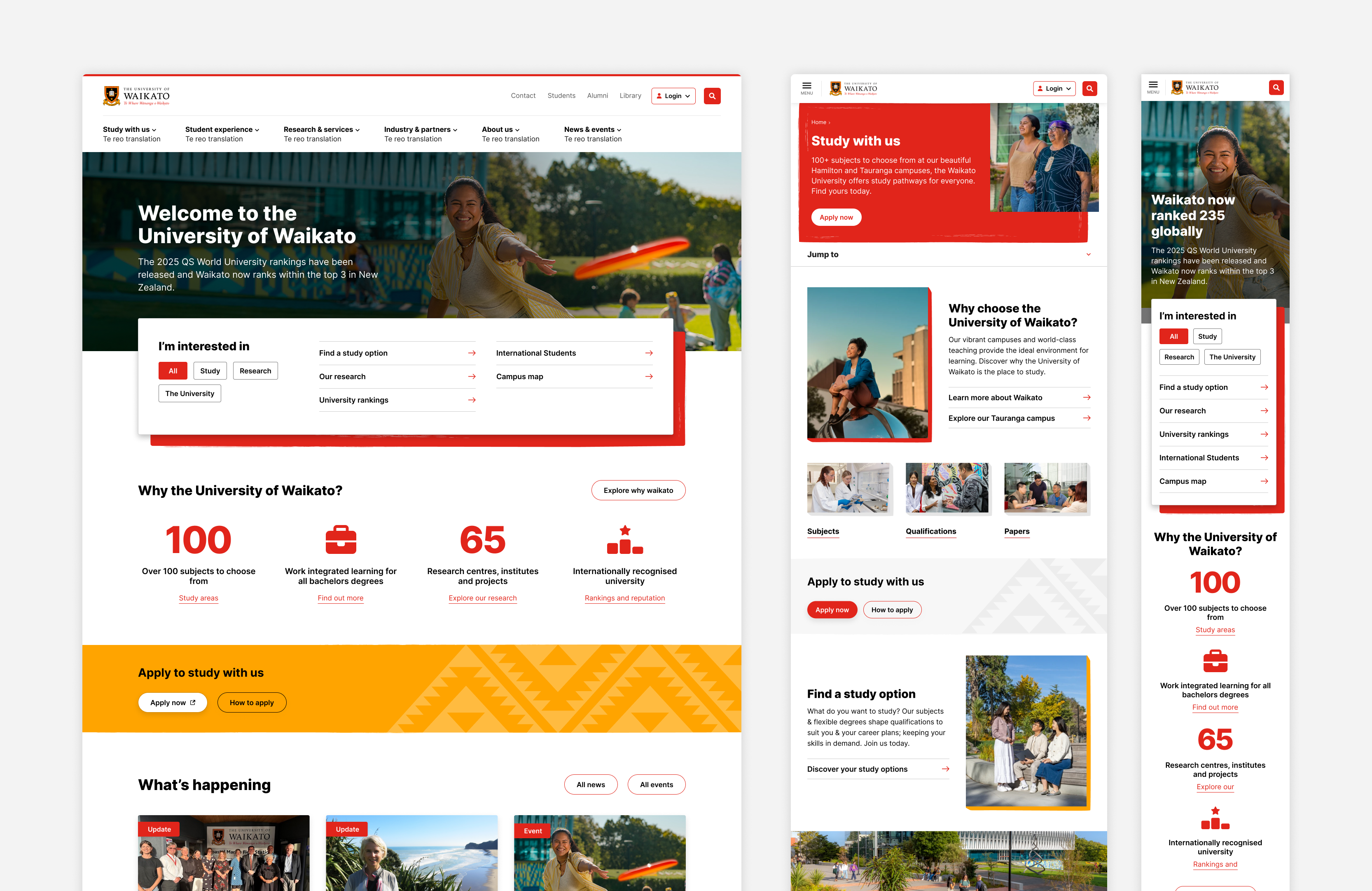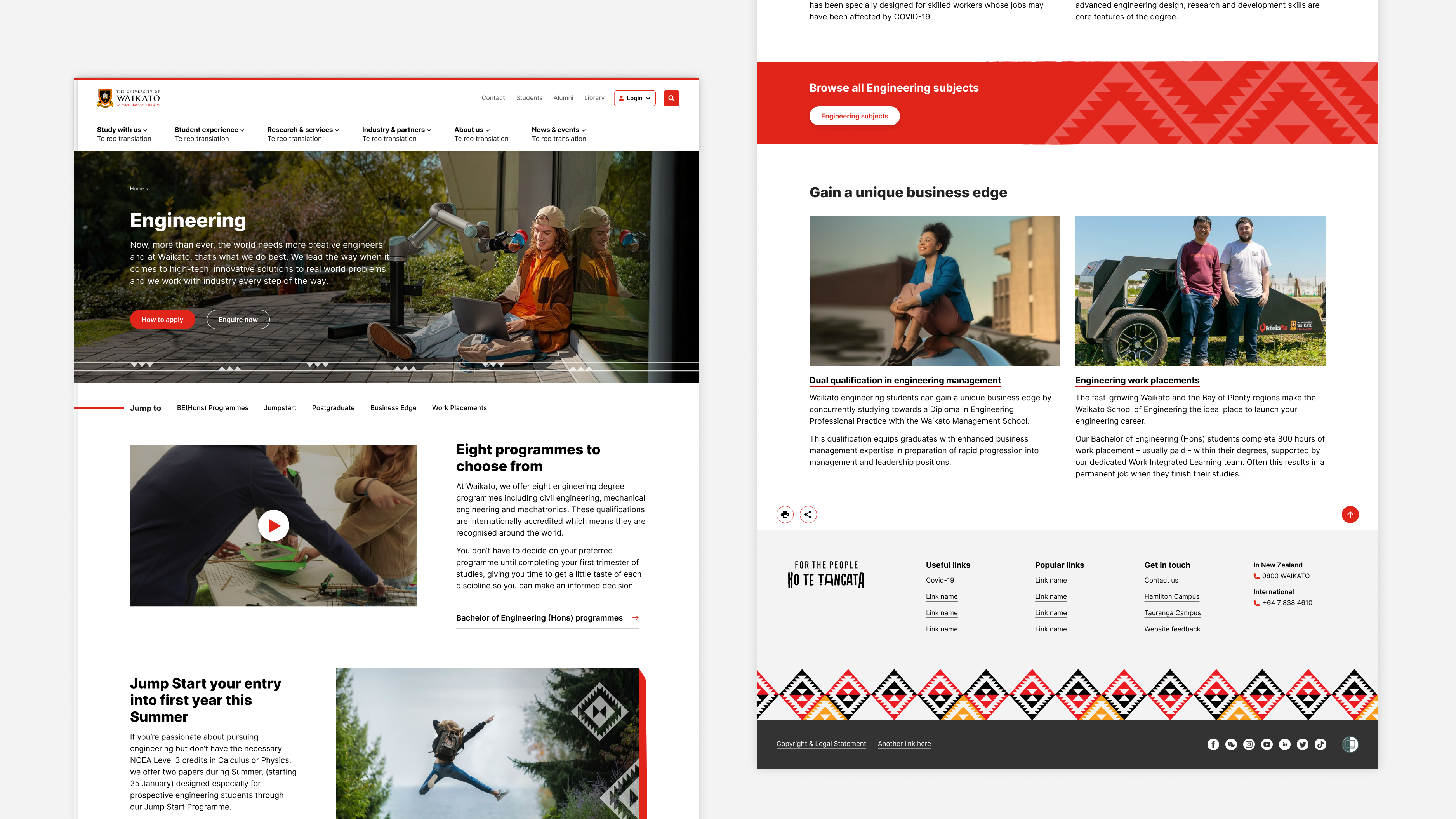
This case study is part of the University of Waikato website redesign and development project. It was a huge project so I’ve split it into multiple case studies including a project overview and discovery case study, and a UX/UI case study on the study section.
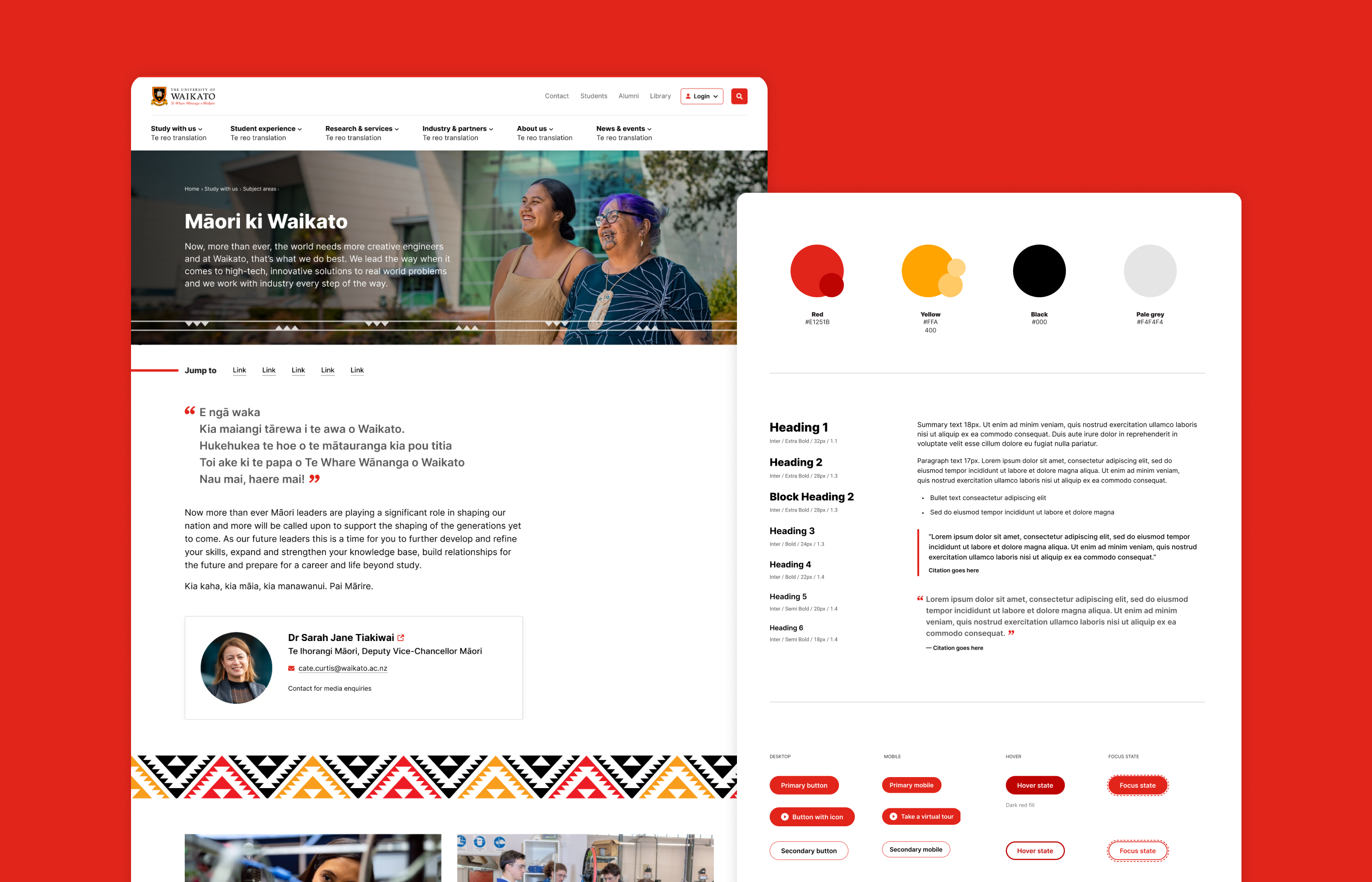
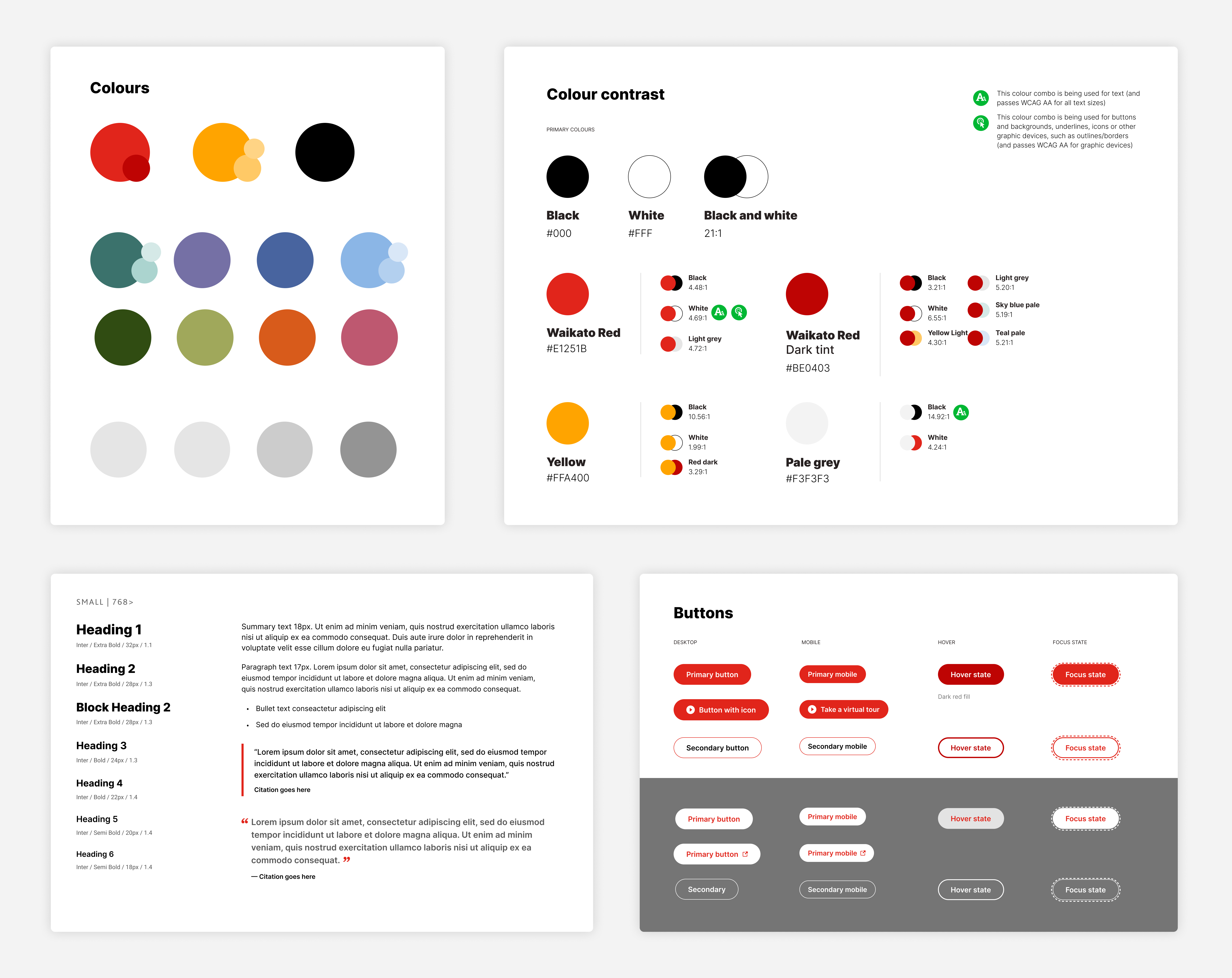
This case study focusses on defining the visual direction and digital style guide. I took the existing branding and refreshed it for the new website, incorporating the styles used in marketing collateral and working with a Māori graphic designer add Māori patterns. The result is an extension of the University of Waikato brand, optimised specially for web.
University of Waikato
Design Lead (what does this mean?)
Facilitating discovery, UX/UI design
2022-2023
The website launched in April 2024
Silverstripe
Silverstripe delivery team; University of Waikato web team
The old website, was outdated and didn’t represent the University of Waikato’s current brand. The marketing team had tried to introduce more updated imagery and concepts from current campaigns, but it didn’t combine well, resulting in a disjointed aesthetic.
The connection to the local Māori Iwi (indigenous tribe), is really important for the University of Waikato, however, the visual design of the website didn’t reflect this at all.
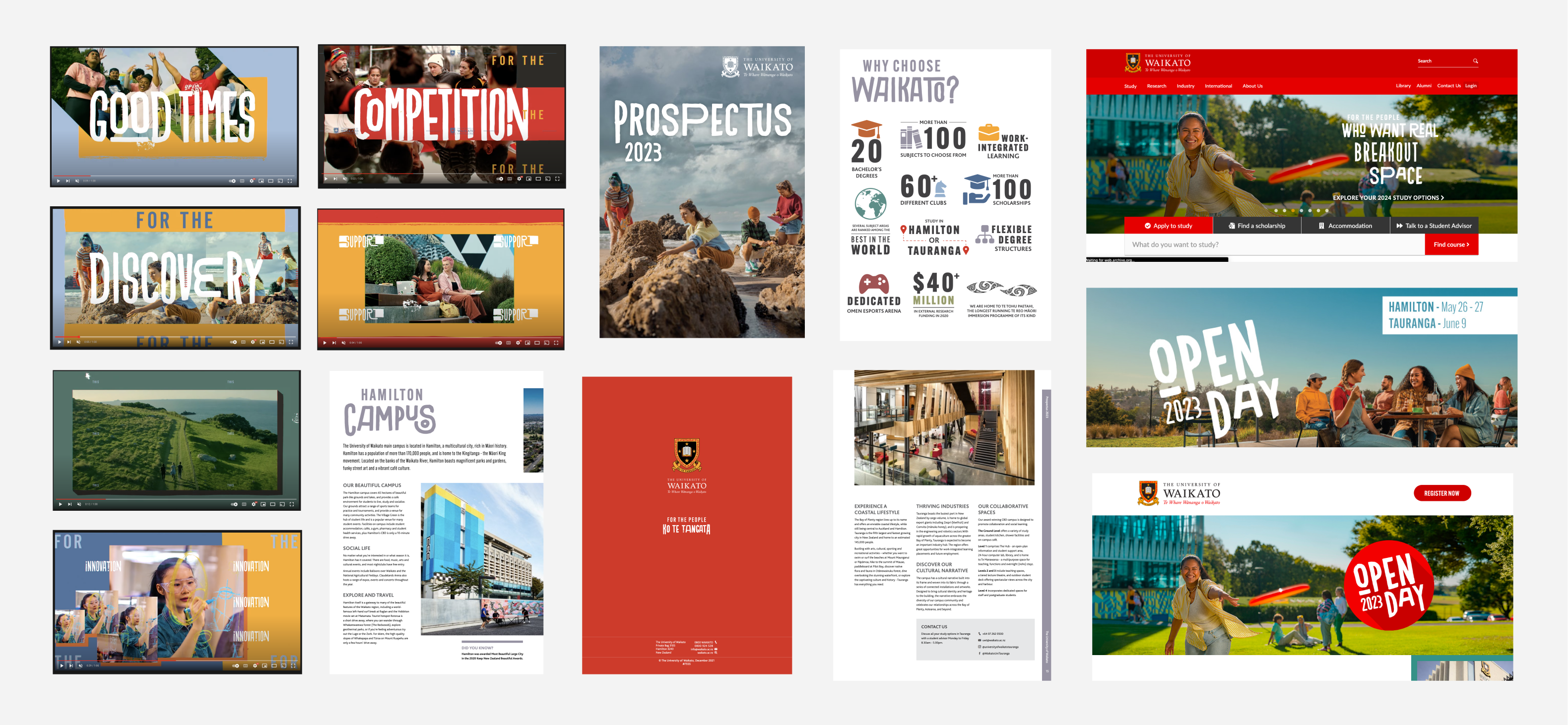
My process was to collect all the existing brand material, identify it’s strengths and what could be used for digital. In the year before the website redesign, a new visual direction had been created for marketing campaigns which I wanted to incorporate into the website design. I also collected examples of the branding and digital identities of universities around the world to understand what they were doing and to get some inspiration.
I created hundreds of different concepts for the homepage and key landing pages to understand how I could best capture the feeling of the University, whilst still ensuring the UI was accessible and the colours and textures weren’t too distracting.
Alongside my work on the website, the university had contracted a Māori designer to create some patterns that could be incorporated into the website. The designer created a series of patterns, and then presented them to me, along with the meaning, significance and guidelines for how to use them, for example, how to crop or repeat the patterns.
My job was to take these patterns and integrate them into the UI design of the website. One challenge was that the patterns were only available after I had completed 70% of the designs. I would normally have begun with the patterns and then created the rest of the visual system from there, however I had to incorporate the patterns into the existing designs.
An important thing to consider with the Māori patterns was that each pattern had a meaning and cultural significance. This meant that there would be some situations where the patterns would not be appropriate to use depending on the content on the page. I needed to create designs that could work with and without the patterns, so that the patterns could be turned off on certain pages.
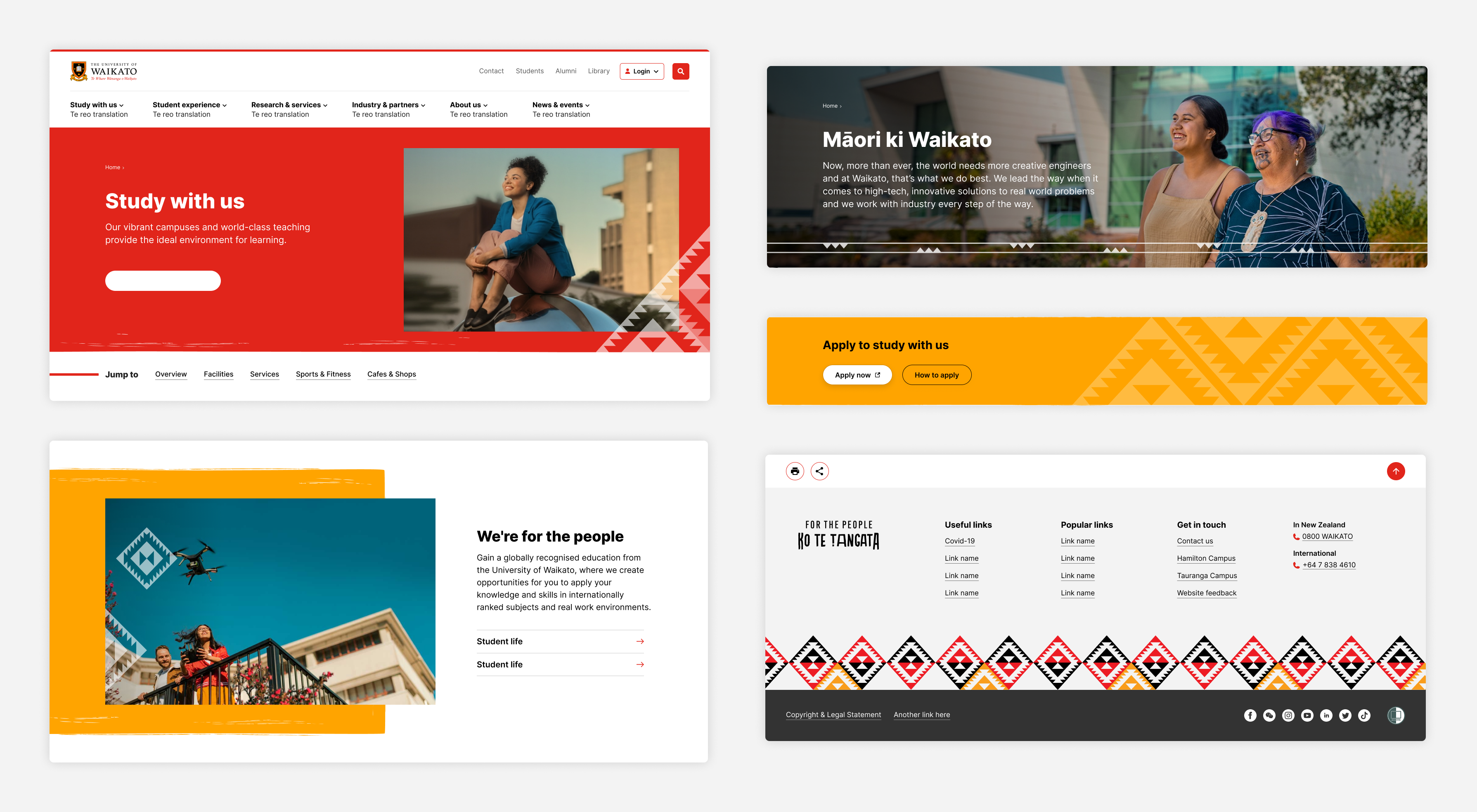
The outcome of this process was a digital style guide, and UI designs for the website.
Design decisions: