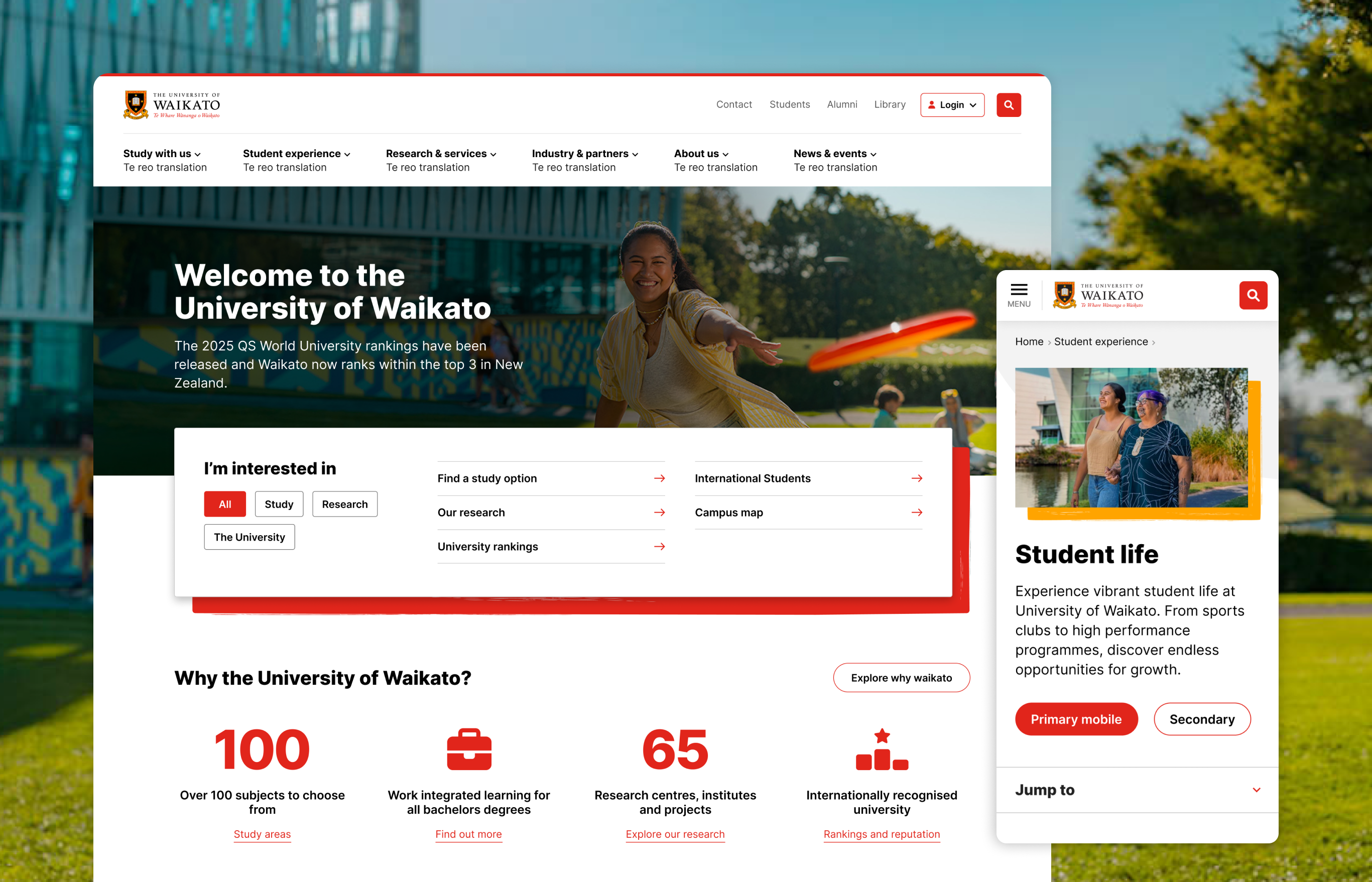
The scope of this project was a full website redesign and development. Their previous website was over 10 years old and had over 100,000 pages. No clear website strategy or content governance had led to an unmanageable, outdated beast.
The aim of the project was to create an intuitive, easy to maintain website, with great visual design that accurately reflects the university's brand identity.
This was a large scale project, it was difficult to turn this project into a case study, so I’ve split it across three—one focussing on research and discovery, one on UX and one on Visual design. This page also has some overview information about my role and the project scope.
University of Waikato
Design Lead (what does this mean?)
Facilitating discovery, UX/UI design
2022-2023
The website launched in April 2024
Silverstripe
Silverstripe delivery team; University of Waikato web team
For 18 months, I was the design lead for a full website redevelopment project for the University of Waikato. My role included:

When we get a client project, my first step is to plan out the discovery part of the project based on the scope, and the clients needs. For the UoW project, their web presence was huge. It was extra important to spend a lot of time trying to understand their goals, purpose and all of their different audiences.
This was the plan:
We began the discovery process in early 2021, everyone was cautious about travel, so we ran the whole process remotely. I used FigJam as a remote white boarding tool, and used it as an opportunity to improve how we ran remote workshops.
Because it was remote, spending time building relationships was even more important. There are always people who are resistant to workshops, and feel uncomfortable participating in a process with an unknown outcome. Because of this, I focussed on creating solid relationships so that they had trust in me, even if they didn’t trust the process just yet.
One of the project challenges was that there were so many different audiences being served by the website. The original scope did not account for so many audiences. My challenge was to figure out how we might best understand all the groups within the time and budget constraints.
To ensure we didn’t miss any of them, I increased the scope of the audience section of the process. I ran nine audience workshops to identify the different audiences who might use the UoW website. Each workshop had representatives from different parts of the university (who worked closely with each audience group). After the sessions, we also sent out surveys to an even wider group.
Overall I ran over 20 remote workshops including nine audience workshops. Each for 1-2 hours with approximately 15 people. The number of people and time constraints meant that I kept these sessions high level.
In the workshops we:
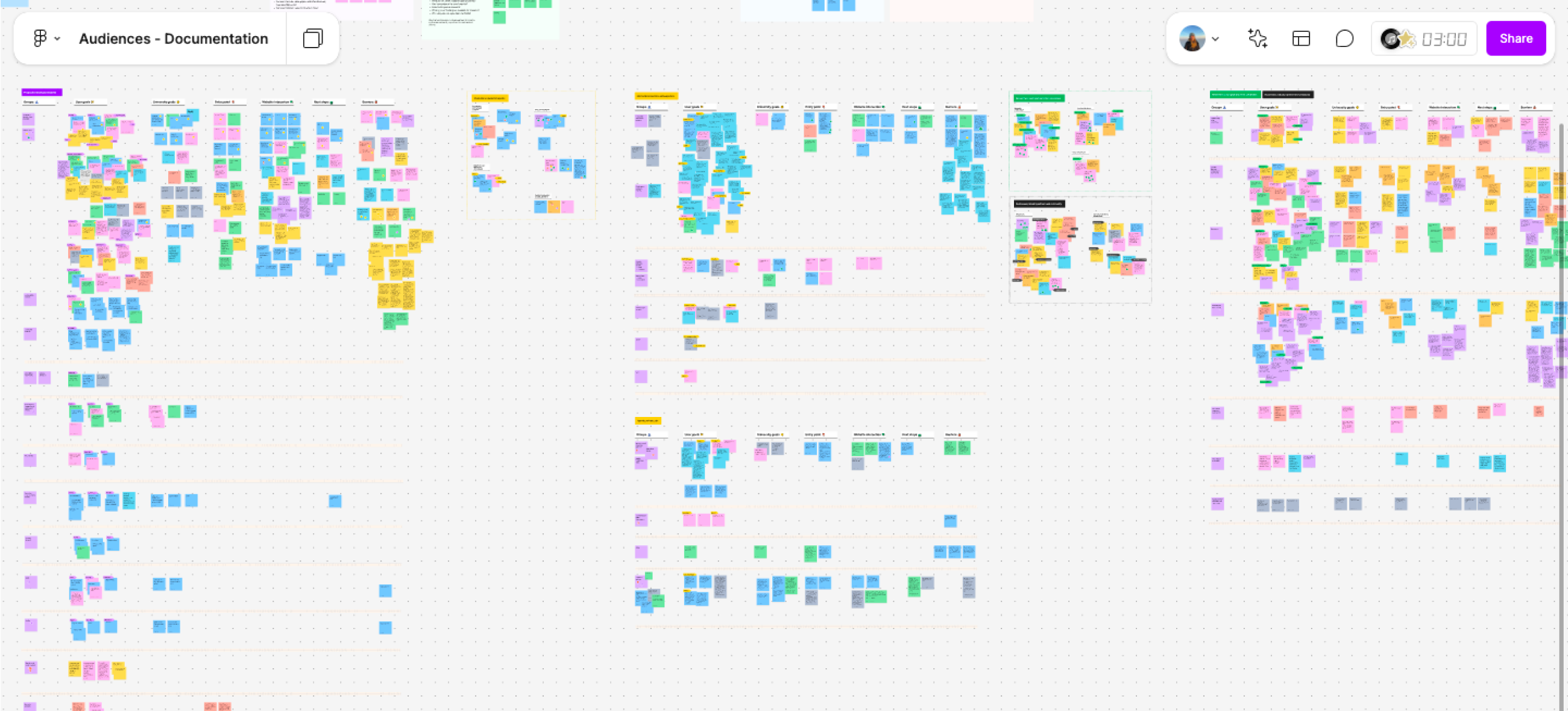
We involved approximately 50+ people in the audience workshops and even more in the accompanying surveys. I collated together the output from each of the workshops, along with the surveys, and the interviews conducted with students, to create what I named ‘the audience mega board.’ From the mega board, I created some audience cheat sheets that included key points to refer back to throughout the process.
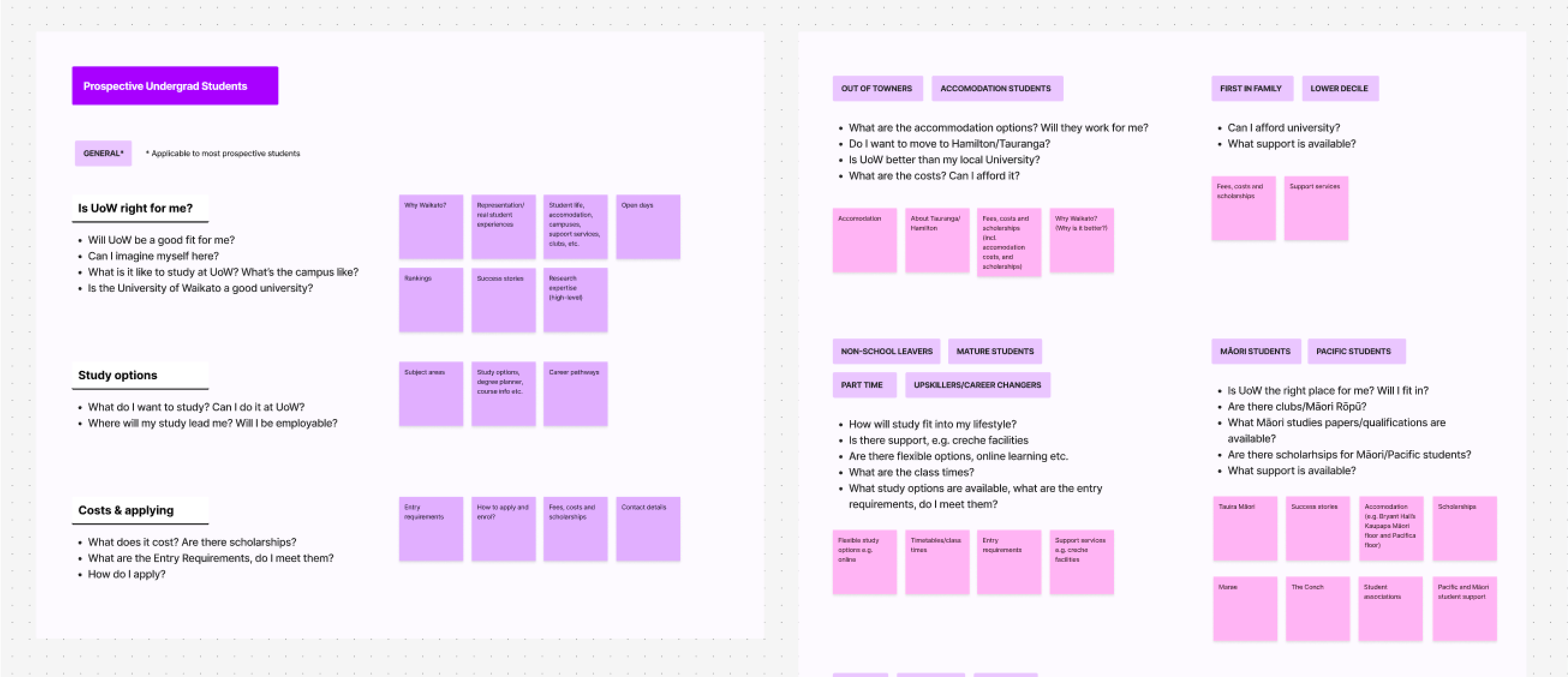
Following the workshops, a researcher from the university also conducted some interviews with students (the most important user group). These interviews gathered similar insights to the workshops.
It’s difficult to make the call as to where to put time and resources (especially when they are limited). We did not have the budget or time to involve each user group in the research phase (there were over ten). The student interviews we did, validated the process, meaning we felt confident using the other insights that came out of the workshop process. I also planned to put time into conducting user testing on designs and wireframes.
I believe conducting this process was an effective way to understand a larger number of groups so that their needs were not missed.
